If you own a waterfront estate in Talbot County, prestige alone is not enough to win today’s buyer. In a market shaped by lifestyle goals, out-of-area demand, and careful comparison shopping, buyers want more than beautiful views. They want condition, clarity, and confidence. If you are thinking about selling in or around St. Michaels and ZIP code 21663, this guide will show you how to position your property to meet the market with strength. Let’s dive in.
Why positioning matters in Talbot County
Talbot County is a small, highly water-oriented market with more than 600 miles of waterfront and planning policies that intentionally protect shoreline and water resources. The greater St. Michaels area tied to ZIP 21663 has a population of about 3,308, and the county’s location roughly 90 minutes from Baltimore and Washington, D.C. helps draw second-home buyers, retirees, and remote purchasers.
That matters because your buyer is often not shopping for a generic house. In many cases, they are shopping for a very specific lifestyle. They may be comparing your property to other waterfront options on the Eastern Shore while also weighing convenience, privacy, boating access, and the ease of owning and enjoying the home from day one.
Countywide numbers also show why a tailored strategy matters. Maryland REALTORS year-end 2025 data reports 578 units sold in Talbot County, with an average sale price of $819,440, a median sale price of $515,000, 201 active listings, 4.2 months of inventory, and 31 median days on market. For a unique waterfront estate, those broad numbers provide context, but they do not tell the whole story.
The gap between average and median sale price suggests that higher-end sales can skew the market. In other words, a distinctive waterfront property should not be positioned by county median pricing alone. It needs a property-specific approach based on waterfront comparables, condition, shoreline features, and overall buyer appeal.
Understand today’s likely buyer
Today’s Talbot County waterfront buyer is often experienced and equity-rich. National buyer profile data from 2025 shows first-time buyers made up only 21% of the market, repeat buyers had a median age of 62, and 30% of repeat buyers paid cash.
This buyer profile fits what many sellers see on the Eastern Shore. Buyers are often moving from another primary market, purchasing a second home, planning for retirement, or making a long-term lifestyle move. They may be financially strong, but they are also careful, informed, and less willing to overlook issues.
They are not just buying square footage. They are evaluating whether the property feels easy to own, easy to understand, and worth the asking price. That is why positioning is not just marketing. It is also preparation, documentation, and pricing discipline.
Start with true turnkey condition
Buyers today are less tolerant of deferred maintenance. According to NAR’s 2025 Remodeling Impact Report, 46% of REALTORS said buyers are less willing to compromise on home condition.
The same report highlights the updates most often recommended before listing: painting the entire home, painting one room, and new roofing. Areas with increased buyer demand over the last two years included kitchen upgrades, new roofing, bathroom renovations, and full interior painting.
For a Talbot County waterfront estate, that means your presentation should feel current and well cared for. You do not need to over-improve every room, but you do need to remove obvious friction. Fresh paint, solid roof condition, functional kitchens and baths, and a clean, polished feel can make a meaningful difference.
Buyers arriving from Washington, Baltimore, or other markets may have limited time to visit. If the home reads as a project, many will move on quickly. If it reads as ready to enjoy, you widen the buyer pool.
Focus on visible, high-impact updates
Before listing, pay close attention to the items buyers notice first:
- Interior paint condition
- Roof age and appearance
- Kitchen functionality and finish level
- Bathroom condition
- Flooring wear
- Lighting and hardware consistency
- Cleanliness and overall upkeep
You do not need every finish to be brand new. You do need the home to feel coherent, maintained, and credible at its price point.
Treat staging as part of the strategy
At the upper end of the market, staging is not a small extra. It helps buyers understand how the home lives. NAR’s 2025 staging survey found that 83% of buyers’ agents said staging made it easier for buyers to visualize the property as a future home.
The same survey found that 48% of buyers expected homes to look like TV-staged homes, and 58% were disappointed when reality did not match that expectation. That gap matters, especially for waterfront properties that are often marketed with beautiful photography and strong first impressions online.
A well-positioned waterfront estate should feel composed, calm, and intentional. Rooms should have a clear purpose. Furnishings should support scale, circulation, and sightlines, especially toward the water.
What staging should accomplish
Strong staging helps your property do four things:
- Show room scale clearly
- Highlight water views and natural light
- Support an upscale but livable feel
- Create a smooth visual connection between indoors and outdoors
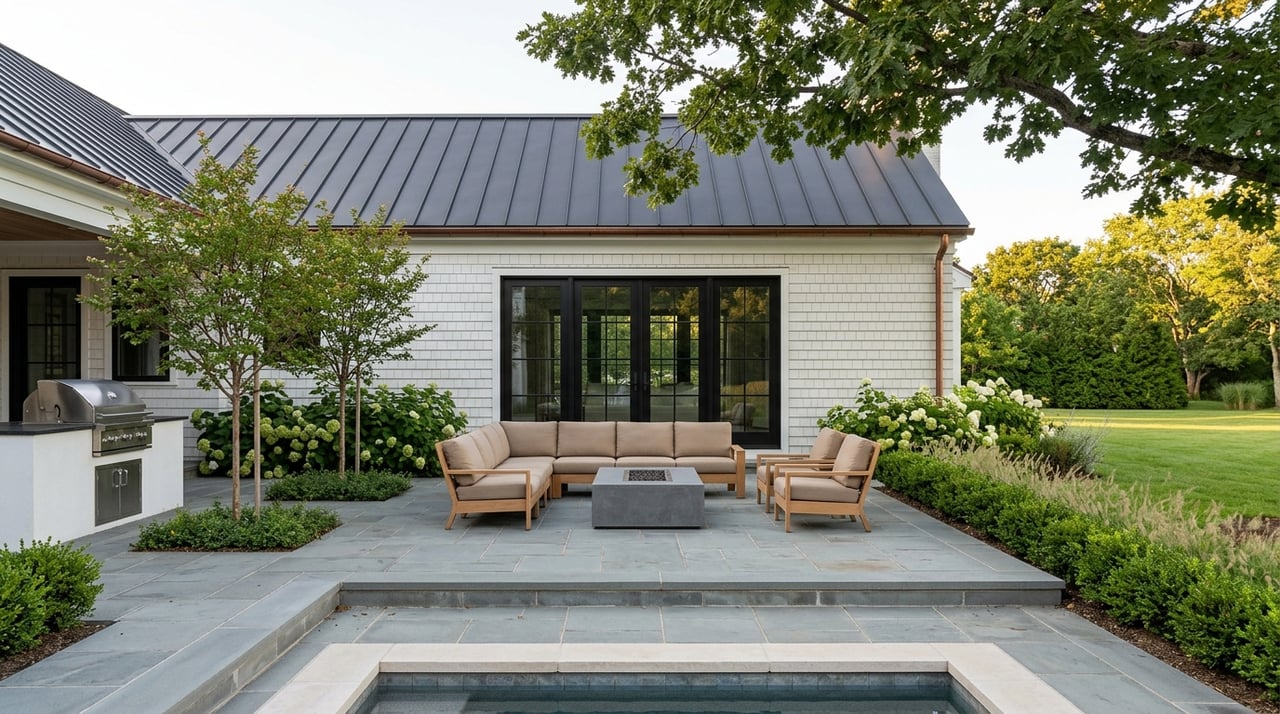
For example, if your home has decks, porches, a pool, or lawn areas near the shoreline, those spaces should be styled as usable extensions of the home. Buyers increasingly think about outdoor areas as places for dining, relaxing, cooking, and gathering, not just decoration.
Make outdoor living part of the value
For waterfront real estate, curb appeal and outdoor living are part of the product. NAR research on outdoor features reports that 92% of REALTORS recommend improving curb appeal before listing, and 97% believe curb appeal is important to buyers.
That is especially true in Talbot County, where the setting is often a major reason the property commands a premium. Buyers are paying attention to the arrival experience, the relationship between the house and the water, and whether the grounds feel usable and well maintained.
Your outdoor spaces should look ready for real use, not just photos. That includes lawns, garden edges, paths, decks, porches, pool surrounds, and seating areas. The goal is to help buyers picture a seamless day on the property, from morning coffee to boating to evening entertaining.
Present the dock and shoreline as infrastructure
One of the biggest mistakes in marketing a waterfront estate is treating the dock, pier, or shoreline as a vague amenity. Today’s buyer wants specifics. They want to know how the waterfront actually functions.
Talbot County notes that marine construction or shoreline stabilization may require permits. Its marine permit guidance lists piers, extensions, boat lifts, rip-rap, bulkheads, stone groins, boat ramps, shoreline stabilization or restoration, and dredging among projects that can trigger county zoning permits and state or federal approvals. Maryland DNR also states that building, repairing, or changing a pier requires a wetlands and waterways permit.
This means your dock and shoreline should be presented as documented infrastructure. If work has been done, buyers will want to know what was done, when it was done, and whether the paperwork supports it.
Waterfront documentation to organize
Before going to market, gather as much of the following as possible:
- Survey or site plan
- Permit history for pier, dock, lift, bulkhead, or shoreline work
- Records of dredging or stabilization projects
- Maintenance records related to marine improvements
- Any available details on current dock configuration and use
Talbot County’s comprehensive plan also notes that Critical Area rules affect waterfront areas extending 1,000 feet landward from the shoreline or inland edge of tidal wetlands. Even if a buyer does not ask about regulations in those exact terms, they still care about whether waterfront improvements are documented and whether ownership transfer is likely to be straightforward.
Use digital marketing that answers real questions
Waterfront buyers often start online, and many are not local when they begin their search. That makes digital presentation critical.
NAR’s 2024 generational trends report found that the top online features for buyers were photos at 66%, detailed property information at 65%, floor plans at 47%, virtual tours at 33%, and videos at 21%. A separate 2025 NAR article reported that 81% of buyers rated listing photos as the most useful online feature.
For a Talbot County waterfront estate, the most effective marketing package should go beyond attractive photography. It should help buyers understand the layout, the flow, and the relationship between the house and the shoreline.
Digital assets that matter most
For many luxury waterfront listings, the most useful assets include:
- High-quality photography
- Detailed property information
- Floor plans
- Virtual tours
- Video that shows the home, grounds, and waterfront setting
These tools help an out-of-market buyer evaluate whether the home is worth a visit. They also reduce confusion, which can improve the quality of showings and buyer interest.
Price with evidence, not prestige
Pricing a Talbot County waterfront estate requires discipline. Countywide data is helpful background, but it is not enough for a one-of-a-kind property.
Mid-2025 Maryland housing data showed that Talbot County experienced lower sales, a lower median price, higher inventory, and much longer days on market than a year earlier. That kind of movement is a reminder that markets shift, even in desirable waterfront areas.
The right price should be supported by evidence specific to your property. That includes recent waterfront comparables, the quality of renovations, dock and shoreline condition, permit status, and overall presentation.
A valuation-first approach is especially important in a market where high-end outliers can distort simple averages. Overpricing can weaken momentum and raise questions. Precise pricing, on the other hand, helps serious buyers engage with confidence.
Build credibility from day one
The strongest waterfront listings do two things well at the same time. They present beautifully, and they answer technical questions clearly.
If your home looks polished but lacks basic waterfront documentation, buyers may hesitate. If it is well documented but poorly presented, they may never get far enough to appreciate the details. The goal is both.
For today’s Talbot County buyer, confidence comes from a complete story. That story includes condition, layout, outdoor living, shoreline function, permit history, and pricing logic that makes sense.
When those pieces are aligned, your estate stands out for the right reasons. If you are thinking about selling a waterfront property on Maryland’s Eastern Shore, Robert Lacaze can help you position it with the valuation rigor, market knowledge, and measured strategy that unique properties require.
FAQs
How should you price a Talbot County waterfront estate?
- You should price it using recent waterfront comparables, property condition, dock and shoreline features, renovation quality, and permit status rather than relying on county median pricing alone.
What updates matter most before listing a waterfront home in St. Michaels or ZIP 21663?
- The research points to high-impact improvements such as fresh interior paint, roof condition, functional kitchens and baths, and a clean, well-maintained overall presentation.
Why is staging important for a luxury waterfront property in Talbot County?
- Staging helps buyers visualize the home more easily, supports online marketing, and creates a polished experience that better matches buyer expectations at the upper end of the market.
What waterfront documents should you gather before selling in Talbot County?
- You should organize items such as surveys, site plans, permit history, records of dock or shoreline work, dredging records, and maintenance documentation for marine improvements.
What digital marketing assets help sell a Talbot County waterfront estate?
- The most useful assets typically include strong listing photos, detailed property information, floor plans, virtual tours, and video that shows the layout, grounds, and waterfront relationship.