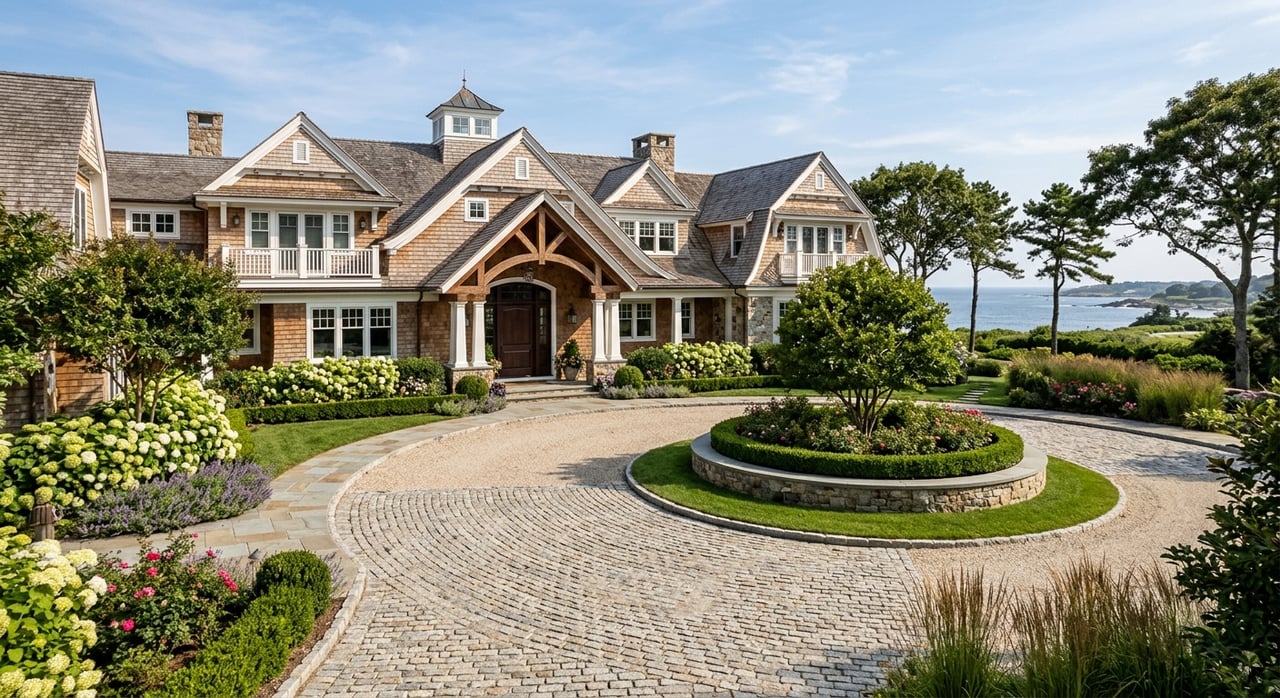
Pricing a waterfront estate in St. Michaels is high stakes. Price too high and you risk months on market and weak offers. Price too low and you leave real money on the table. In this guide, you’ll learn how top sellers in 21663 approach pricing with clarity, from the value drivers unique to Talbot County waterfront to the appraisal-plus-CMA game plan that attracts qualified buyers. Let’s dive in.
Know the 21663 market context
Talbot County medians are helpful background, but they do not set the price for a Miles River or Harris Creek estate. Public portals show countywide medians in the high 400s to low 500s in early 2026, with the exact figure varying by vendor and method. For example, one vendor reported a county median sale price near $475,000 in February 2026, while another placed a typical home value at about $481,463 through February 28, 2026, and a third showed a median listing price near $525,000 in March 2026. Always identify the vendor and date when you cite medians, and remember that St. Michaels and neighboring waterfront ZIPs sit notably higher than the county at large.
At the top end, luxury waterfront sales trade irregularly and at materially higher price points than county medians. That illiquidity is normal for unique estates. It is also why your pricing must rely on creek and river comparables, not broad county averages or automated estimates.
State planning data from 2024 highlights that Talbot County sale values are higher than many Eastern Shore peers, which reinforces the strength of local submarkets. You can review the state’s summary in the Maryland Department of Planning’s 2024 county median sale values report for added context. See the Maryland Planning 2024 median sale values.
What drives waterfront value in Talbot County
Physical features that move price
- Water frontage and orientation. Buyers look at total shoreline and whether your view opens to the Bay, a wide tidal river like the Miles or Tred Avon, or a protected creek. Talbot County also recognizes usable water area and local harbor or lateral lines, which matter when evaluating dock potential. You can find those concepts in the county code. Review Talbot County’s water-dependent and usable water area provisions.
- Water depth and navigation. Depth at mean low water, bridge clearances, nearby channels, and any dredging history influence boat size and utility. Deeper, obstruction-free water typically adds value.
- Dock, lift, and boathouse. A well-permitted pier with adequate slip length, sound pilings, and a boat lift meaningfully boosts buyer confidence. Permitting status and maintenance records are key.
- Shoreline protection. Bulkheads, revetments, or living shorelines impact perceived risk and future cost. Recent repairs with documentation can strengthen your pricing story.
- Elevation and flood zone. Site elevation relative to base flood elevation, an elevation certificate, and mapped Special Flood Hazard Area status affect insurance and lending. Talbot County maintains helpful flood resources for owners. Visit Talbot County’s flood resilience page. For deeper context, you can also reference the FEMA Flood Insurance Study for the county. View the FEMA Flood Insurance Study for Talbot County.
- Utilities and systems. Being on county sewer versus septic, the age and capacity of septic and well systems, and recent updates all factor into buyer math.
- Access, privacy, and lot layout. Long drives, tree buffers, and unobstructed view corridors can command a premium.
Permits and regulations to confirm upfront
- Chesapeake Bay Critical Area. Much of waterfront property lies within the 1,000-foot Critical Area, which regulates intensity, buffers, and water-dependent structures. Private piers, community piers, and boathouses have specific rules in the Talbot County Code. Check applicable Critical Area and pier standards.
- Wetlands and waterway permits. Piers, bulkheads, living shorelines, dredging, and similar activities often require authorization through the Maryland Department of the Environment’s Wetlands and Waterways Program, and many projects involve joint state and federal review. Collect your permit records and contractor notes before you list. See MDE’s Wetlands and Waterways permitting FAQs.
- Federal coordination. In some cases, U.S. Army Corps authorization applies, especially for dredging or extending docks. Your documented permit history improves marketability and speeds due diligence.
Risk, resilience, and how buyers price it
Chesapeake Bay communities face documented sea-level rise and land subsidence. Research on the Chesapeake shows that homes exposed to future sea-level risk can face price penalties, while adaptation measures such as bulkheads can increase relative value in exposed zones. Buyers will ask about long-term flood risk, insurance history, and adaptation costs, so it pays to be prepared with facts. Review the Chesapeake property value study on sea-level risk and adaptation.
Build a pricing foundation: appraisal plus CMA
Unique estates deserve a two-lens valuation. A licensed appraiser produces an independent opinion of value under USPAP, and for complex waterfront assets that often includes a detailed discussion of exposure time and any unusual assumptions. The comparative market analysis your agent prepares adds a marketing lens, selecting the real competitive set and applying practical adjustments for waterfront lifestyle features. See Appraisal Institute guidance on specialty valuations and exposure time.
Here is a proven workflow for high-value waterfront listings:
- Pre-listing shoreline due diligence. Gather MDE and county permits for piers, bulkheads, and any dredging. Pull your elevation certificate and septic documents. If the shoreline or pier may need work, consider a marine-contractor inspection and outline options. Start with MDE’s permitting FAQs.
- Commission a pre-listing appraisal. Ask for a waterfront-experienced appraiser to test your assumptions and document exposure time. A restricted appraisal or consult can reduce surprises later. Reference Appraisal Institute best practices.
- Build a CMA that weights waterfront specifics. Your agent should weight water type, usable water area, dock status and capacity, elevation and flood mapping, shoreline protection, and very recent closed waterfront sales. Expect to justify larger dollar adjustments for function and permits than you might on a non-waterfront home.
- Create a price ladder and launch plan. Outline an initial list price that reflects the highest credible comparable, not an aspirational outlier. Pair it with 30, 60, and 90-day review checkpoints and a pre-authorized concession strategy tied to inspection or permit feedback.
Set a competitive price without overreaching
Your goal is to attract qualified, privacy-minded buyers quickly while protecting your negotiating power. Lead with a price supported by the best recent waterfront comp set within your same creek or river, and document your rationale. Resist the urge to “test” a number far above the market. On unique estates, a stale first impression can be hard to unwind.
Emphasize what reduces buyer uncertainty. That includes permitted dock documentation, recent bulkhead or shoreline work with invoices, updated septic or electrical systems, an elevation certificate, and clear insurance history where available. When you package these details up front, buyers value your estate as a lower-risk acquisition.
Marketing presentation matters at this level. Use professional photography and video at golden hours, drone footage that shows usable water area and navigation routes, and targeted syndication that reaches regional and national second-home audiences. Broker events and well-produced private showings help you maximize early momentum.
Launch timing, days on market, and what to watch
Days on market vary by vendor, but a county-level snapshot showed a median around 95 days in late winter 2026. Luxury waterfront typically requires longer exposure time due to a narrower buyer pool. That said, overpricing often leads to multiple cuts, falling showings, and weaker offers.
Track these signals from day one:
- Day 0 to 14. Measure inquiries, broker tours, qualified showings, and online saves or views. If you see multiple qualified showings and at least one credible offer, your pricing is resonating.
- Day 15 to 30. If showings are light relative to your marketing push and feedback cites price, consider relisting tactics such as price banding within common search brackets or a modest messaging refresh.
- Day 30 to 60. Luxury sellers often make a first formal price review at 45 to 60 days. If traction is absent by 60 to 90 days, a reduction is common in higher-priced segments. Document what the market is telling you and adjust with purpose.
- Day 60 to 90 plus. If you have solid showing volume but low offers, consider targeted concessions aligned to verified buyer concerns, such as a credit for shoreline work, rather than a headline cut. If interest fades beyond 90 to 120 days, reassess comps, new permits, and flood or elevation updates, then reposition by 5 to 10 percent only if the data supports it.
Practical heuristics can keep decisions objective:
- Fewer than three qualified showings in the first 30 days suggests an immediate pricing and marketing review.
- A showing-rate drop greater than 30 percent after week two, with consistent marketing, points to a price or message issue.
- Multiple conditional offers well below target is a cue to revisit price or to structure smart concessions that protect value.
A seller’s checklist that strengthens price
Come to market with documents in hand. It signals confidence and can justify a stronger number.
- Title and deed, recorded easements, and any riparian rights documentation.
- MDE and USACE permit history for piers, bulkheads, boathouses, or dredging, plus Talbot County permit records. Confirm requirements with MDE’s FAQs and consult the Talbot County Code for water-dependent use standards. View the Talbot County Code index for waterfront rules.
- Elevation certificate, flood insurance history, and any FEMA letters or related materials. Use Talbot County’s flood resources.
- Septic inspection and pump records, plus well or sewer documentation.
- Recent structural, bulkhead, and dock inspections, with contractor estimates for any recommended work.
- A property survey that shows lateral or harbor lines or usable water area if available.
- A concise FAQ for buyer agents that covers navigation routes, depth at mean low water, known dredging history, and any HOA or community water-use rules.
How to defend your number with buyers and appraisers
When you receive an offer, be ready to show the logic behind your price. Organize your comps and adjustments by water type, usable water area, dock capacity, elevation or flood facts, and shoreline protection. Keep your appraisal or consult letter handy, along with invoices and permits that back up your property’s condition.
If the buyer’s appraiser asks questions, provide the packet and respond quickly. Clear documentation helps align appraisals with market reality on complex waterfront properties. Appraisal Institute guidance on competence and unusual assumptions can be a helpful reference point.
Final thought
The right price for a Talbot County waterfront estate is built on specifics: shoreline, depth, permits, elevation, and recent waterfront comps, not broad averages. Combine a pre-listing appraisal with a disciplined CMA, launch with a clear review plan, and package your permits and improvements so buyers see value and certainty. If you want an experienced, valuation-first partner on Maryland’s Eastern Shore, Robert Lacaze is ready to help. Let’s Connect.
FAQs
How do county medians relate to my St. Michaels estate price?
- County medians are background only; your price should be set by recent waterfront sales on the same creek or river, adjusted for usable water area, dock capacity, elevation, and shoreline protection.
What Talbot County rules affect my pier or boathouse pricing?
- The Chesapeake Bay Critical Area rules and Talbot County Code govern water-dependent structures; confirming permit status and usability can materially support a higher price. Review the Talbot County Code.
How does flood risk and elevation affect value and insurance?
- Elevation relative to base flood elevation and SFHA mapping affects insurability and buyer perception; having an elevation certificate and clear flood documentation helps defend price. See Talbot’s flood resources.
Should I get a pre-listing appraisal for a unique waterfront home?
- Yes, a waterfront-experienced appraiser can validate your CMA and document exposure time, reducing surprises later and helping you justify price to buyers and lenders. Reference Appraisal Institute guidance.
Do shoreline protections like bulkheads increase value?
- In Chesapeake areas exposed to sea-level rise, research shows unprotected homes face price penalties while protective structures can raise relative value, subject to condition and maintenance costs. Read the Chesapeake study.